

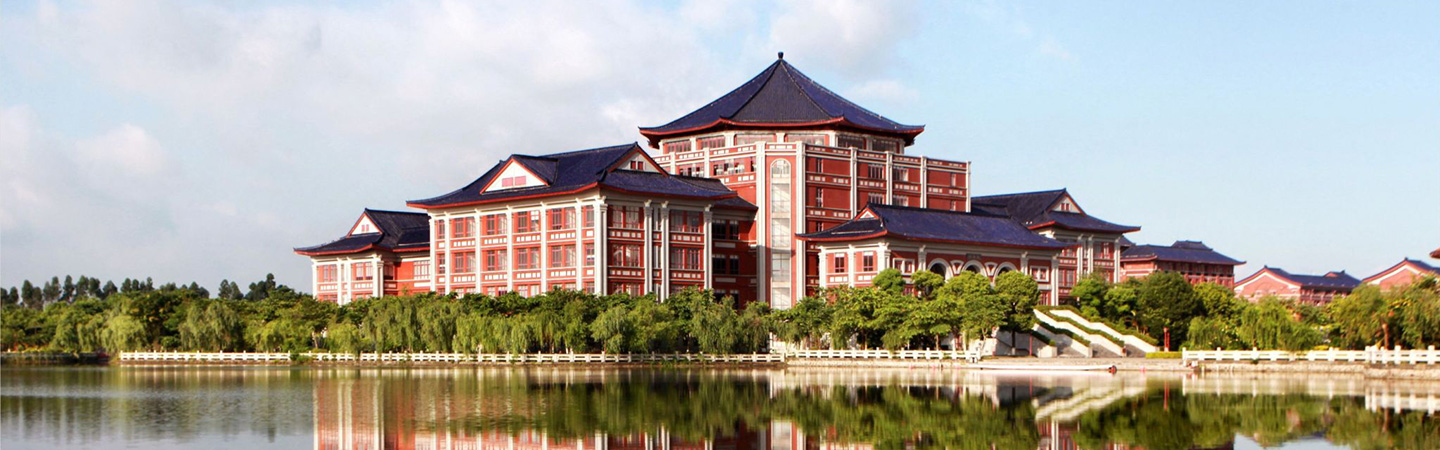
Library Introduction
The Library was founded alongside the university and has evolved with its development, undergoing several name changes: 1951 – Library of the Northeast Military Region Medical School / the 11th Army Medical Secondary School / the 11th Army Medical School; 1958 – Qiqihar Medical College Library; 1962 – PLA Qiqihar Medical College Library; 1966 – PLA Military Medical College Library; 1975 – First Military Medical University Library. In August 2004, following the university's overall transition, it was renamed Southern Medical University Library.
Guided by an integrated development model of "Resources, Services, Management, and Technology," the library is recognized as a Ministry of Education Sci-Tech Novelty Search Station (Y01), serves as the Medical Digital Resources Center (one of the six resource centers within the Guangdong Provincial Digital Literature Resource Sharing Service System for Higher Education Institutions), and chairs the Service Innovation Committee of the Guangdong Provincial Higher Education Library and Information Work Steering Committee. It comprises two campuses: the Main Campus and the Shunde Campus, with a total floor area of 44,661 square meters. The library currently has 45 staff members organized into four departments and one teaching section: Reference Services Department, Learning Support Department, Decision Support & IP Services Department, General Affairs Office, and Medical Informatics Teaching & Research Section. Leadership includes 3 members: one Director (concurrently Party Branch Secretary) and two Deputy Directors.
Collection Highlights
As the "Guangdong Provincial Digital Education Teaching Resource Center for Medical Sciences" and the "Medical Digital Resources Center" within the third phase of the "211 Project" – Guangdong Provincial Digital Literature Resource Sharing Service System for Higher Education Institutions, the library's cumulative holdings reached 4.27 million volumes as of December 2024. Its collections feature world-authoritative comprehensive medical journals and databases such as SCIE (Science Citation Index Expanded), Science, Nature, JAMA (Journal of the American Medical Association), NEJM (The New England Journal of Medicine), The Lancet, BMJ (The British Medical Journal), core foreign-language journals across medical disciplines, e-books, laboratory guides, clinical exam question banks, surgical videos, anatomical atlases, and more. The library has also built several proprietary databases, including the SMU Academicians Collection, SMU Theses & Dissertations Repository, SMU Electronic Textbook Repository for Professional Courses, SMU Institutional Repository, and Subject Resource Portals. This forms a collection system focused on biomedical literature while also covering the humanities, history, philosophy, politics, economics, law, education, management, and other disciplines, essentially achieving the goal of digitizing its holdings.
Reader Services
From 2007 to 2008, the completion and opening of the new library buildings on both the Main and Shunde Campuses provided strong support for the university's teaching, research, and medical development. The library employs an integrated management and service model of "collection, loan, and reading." The two campuses offer over 4,700 reading seats, more than 40 seminar rooms, and 180 public computers. Weekly opening hours reach 98 hours, extending to 105 hours during exam periods. The library welcomes over 1.6 million visitors annually, with its website receiving around 3 million hits.
Beyond traditional book, periodical, and electronic reading areas, the layout includes dedicated spaces such as a Classic Reading Section, Book Exchange & Donation Area, Alumni Donation Section, and Leisure Spaces. Both buildings offer campus-wide Wi-Fi coverage and provide more personalized, user-friendly, and intelligent services through facilities like self-service printing/copying/scanning, self-checkout machines, a seat reservation system integrated with access control, seminar room booking systems, individual study pods, recording booths, video-based visitor flow systems, in-library information displays, and a voice-alert smoking control system. By the end of 2020, the library completed upgrades to turnstiles, the seat reservation system, and the seminar room management system across both campuses. The library now fully supports triple authentication via card swipe, QR code, and facial recognition. Self-service facilities for printing/copying, book borrowing/returning, library card services, and locker rental have become more intelligent and convenient, making a "card-free" library experience a reality.
In recent years, the library has focused on expanding new service models and enriching knowledge services. Subject librarian services strengthen ties with academic schools and enhance the library's information service function. Online new book recommendations, reservation/renewal services, and virtual reference consultations meet the daily information needs of the university community. Services such as the digital library, mobile library, VPN, and CARSI remote access enable users on and off-campus to search and utilize library resources and services 24/7. Through its status as a Ministry of Education Sci-Tech Novelty Search Station, the library meets deeper information needs for researchers both inside and outside the university, including project proposal support, sci-tech novelty searches, document retrieval, document delivery, thesis similarity checking, and manuscript polishing. By establishing service connections with CALIS (China Academic Library & Information System), the CALIS National Medical Literature Resource Sharing Network, Shanghai Library, and other institutions, the library promotes resource co-construction and sharing, strengthening overall document supply.
User Education
As one of the earliest institutions in China to offer medical literature retrieval courses, the library began offering lectures on library use and introductions to foreign indexing publications in 1979 and established the Medical Informatics Teaching & Research Section in 1994. The section places great emphasis on standardizing medical information retrieval education, leading among national medical universities in terms of target audience, teaching methods, and content. Current courses include Medical Information Acquisition and Management for undergraduates and master's students, and the fully English-taught Medical Information Retrieval & Management for international clinical medicine students. The library also regularly offers free lectures such as "Digital Resource Training," "Freshman Library Orientation," and "On-Department Training." In 2001, the teaching project Research and Practice of the 'Three, Four, Five' Teaching Model for Medical Postgraduates' Literature Retrieval Course won the Third Prize for Outstanding Teaching Achievements in the PLA. Since 2004, one staff member has been honored as an "SMU Excellent Teacher," and nearly 20 have received the university's Teaching Excellence First, Second, or Third Prize. The course Medical Information Acquisition and Management has been recognized as a Guangdong Provincial Top-Quality Resource Sharing Course, Guangdong Provincial Graduate Student Demonstration Course, and has received project funding for Guangdong Provincial Characteristic Education & Teaching Reform and Guangdong Provincial Higher Education Research and Reform initiatives.
Research Work
Since 2004, library staff have published over 100 teaching and research papers. A significant milestone was reached with the publication of "Finding the Evidence for Therapeutic PICO Questions on Four Electronic Resources" in the UK journal Library Review, marking the library's first internationally published paper. As the lead editor, the library has compiled and published numerous textbooks and monographs, including Medical Literature Retrieval, Medical Information Acquisition and Management, Modern Medical Information Retrieval, Internet Medical Information Retrieval and Publication, Medical Information Retrieval and Utilization, Modern Network Medical Technology, Biomedical Search Engines and Network Information Resource Development, Medical Information Retrieval and Management, Pathways and Methods for Medical Information Gathering, Modern Medical and Pharmaceutical Information Retrieval, and Medical Librarianship. Staff have also contributed to the compilation of the Ministry of Health planning textbook Medical Information Retrieval (for College Students) and Theory and Practice of Medical Libraries. In 2006, Biomedical Search Engines and Network Information Resource Development won the Third Prize at the 3rd National Outstanding Educational Research Achievement Awards, and Comparative Evaluation, Development, and Utilization of Biomedical Search Engines won the Third Prize of Guangdong Provincial Science and Technology Award. The library has secured research grants exceeding 6 million RMB, leading or participating in projects such as the Guangdong Provincial "211" Project Phase III Public Service System Construction, Guangdong Provincial Education & Research "11th Five-Year Plan" Project, Guangdong Provincial Higher Education Continuing Education System Construction Project, Guangdong Provincial Science and Technology Plan Project, Guangdong Provincial Natural Science Foundation Doctoral Start-up Project, Guangdong Provincial Medical Research Fund Project, sub-projects of the National 863 Program, Guangdong Provincial Health Department Projects, Guangdong Provincial Education Department Projects, Ministry of Education Science and Technology Development Center "Fast Track for Sci-Tech Papers" Project, Ministry of Health Returnee Fund Project, and the Guangdong Provincial Higher Education Modern Educational Technology "151" Project.
Publicity and Promotion
To actively guide users in approaching, understanding, and utilizing the library, promote a culture of reading on campus, and foster a campus atmosphere that values learning, the library has organized an annual "Approaching the Library" Publicity and Promotion Month series around World Book Day (April 23) since 2007. Centered on sub-themes like book and periodical guides, electronic resource promotion, collection development, user conduct guidelines, and reader interaction, these activities comprehensively mobilize and enhance users' enthusiasm and initiative in reading and using the library, improving their cultural and information literacy. This campus cultural brand event, now in its eighteenth consecutive year, emphasizes continuous innovation in form and content and has generated significant impact among the university community.
External Exchange
In October 2010, the SMU Library established a publication exchange partnership with the Yu Chun Keung Medical Library of The University of Hong Kong. The first successful book exchange took place in June 2011, marking the library's first step in international book exchange. In August 2012, the library formed a "Sister Library" relationship with the Taipei Medical University Library, signing a formal cooperation agreement. Based on equality and mutual benefit, the agreement covers comprehensive collaboration in resource sharing, interlibrary loan, document delivery, periodical exchange, book exchange, and staff visits. Moving forward, the library will further deepen exchange and cooperation with libraries worldwide, seeking common development and progress.
Student Association Guidance
From 2009 to 2010, the Readers' Association and the Library Volunteer Organization, both guided by the library, were established. With the mission of "jointly pursuing a life journey of beauty, freedom, passion, happiness, and wisdom," the Readers' Association has successfully organized events like Book Crossing, the "Erudition Cup" Knowledge Challenge, and the compilation and publication of essay collections. The Volunteer Organization was formed to address staffing constraints. Building upon a base of 100 university-appointed student assistants, it recruits student volunteers to assist with current periodicals management, catalog search services, and collecting user feedback and suggestions. In recent years, the volunteers'无偿 service has infused vitality into the library's work, becoming a bridge connecting the library with its users.
Nurtured by the clouds over the mountains and the pearls in the river, this esteemed institution writes magnificent chapters. The staff of the Southern Medical University Library will continue to uphold the university spirit of "Integrity and Pragmatism, Self-Reliance and Striving, Pioneering and Innovation, Pursuit of Excellence." Guided by a service ethos of "Serving You, Pursuing Excellence," underpinned by an international vision and a holistic development philosophy, and aiming to build a "Knowledge-Service-Oriented Digital Library," we strive to advance all aspects of our work through meticulous, thoughtful, and refined service practice. We are committed to providing the entire university community with more comprehensive scientific literature and information support, and higher-quality document and information services.
(Updated: December 23, 2025)